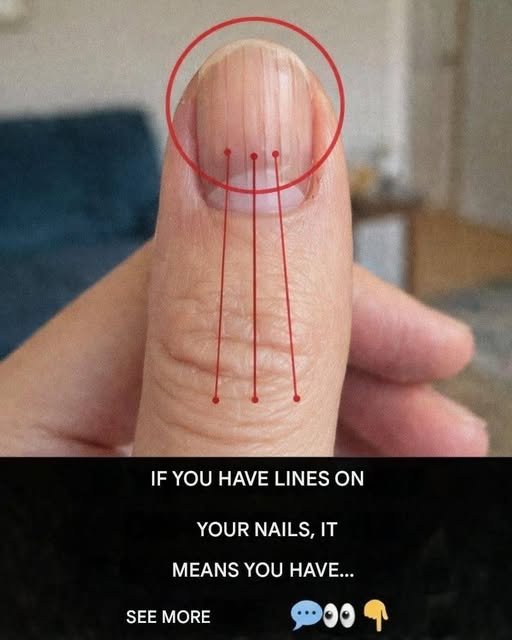
The image above features a close-up of a fingernail with faint vertical lines running from the cuticle to the tip. The accompanying text asks, “If you have lines on your nails, it means you have…”
This is a common question, and the answer is often less alarming than many people expect. Vertical ridges on the nails are one of the most frequent nail changes seen in adults, and in the vast majority of cases, they are a normal part of the aging process rather than a sign of a serious underlying disease.
What Are Vertical Nail Ridges?
Vertical ridges, also called longitudinal ridges, are faint lines that run lengthwise along the nail, from the base near the cuticle to the tip. They are often described as looking like subtle grooves or ripples in the nail surface. While they can appear on both fingernails and toenails, they are most noticeable on the thumbs and other fingernails.
These ridges are typically shallow and uniform, and they tend to become more prominent as we get older. This is due to natural changes in cell turnover within the nail matrix, the area under the cuticle where the nail grows. As the efficiency of this process declines with age, the nail plate can develop these characteristic vertical lines.
Common Causes and Associations
While aging is the most common reason for vertical ridges, several other factors can contribute to or worsen their appearance:
- Normal Aging: The most frequent cause. Many people develop vertical ridges as they get older, and these lines are not dangerous.
- Dry Skin or Eczema: Very dry skin or skin conditions like eczema can be associated with vertical lines on the nails.
- Nutritional Deficiencies: An iron deficiency can cause vertical nail ridges, and a zinc deficiency may also lead to nail changes.
- Thyroid Disease: Hypothyroidism (an underactive thyroid) can cause thick, brittle nails with vertical ridges that may crumble or break easily.
- Trauma or Nail Picking: Injuries to the nail or habitual picking or biting of the nails and cuticles can damage the nail matrix and lead to ridges.
- Rheumatoid Arthritis: This autoimmune condition can be associated with vertical ridges, particularly when it affects the finger joints.
- Other Skin Conditions: Conditions like psoriasis or lichen planus can also affect the nails and cause ridging.
When Should You Be Concerned?
For the vast majority of people, vertical nail ridges are simply a cosmetic variation and nothing to worry about. The Cleveland Clinic notes that while ridges can sometimes be a sign of a current or past illness or a nutrient deficiency, in many cases they are harmless.
However, there are situations where nail changes warrant a medical evaluation. You should consult a healthcare provider if you notice:
- Horizontal Ridges: Lines that run across the nail (side to side) rather than up and down. These can indicate a more serious issue.
- Changes in Color: Discoloration of the nail, such as darkening or a change in the nail’s normal hue.
- Other Symptoms: Ridges accompanied by other concerning signs, such as nail separation, pain, swelling, or a change in the shape of the nail.
What Can You Do?
There is no specific treatment to eliminate vertical ridges that are caused by aging, as they are a natural part of the nail’s structure. However, you can take steps to keep your nails healthy and minimize their appearance:
- Keep Nails Moisturized: Use a moisturizing nail cream or cuticle oil regularly to prevent dryness.
- Avoid Trauma: Be gentle with your nails and avoid using them as tools. Avoid harsh nail polish removers with acetone.
- Maintain a Balanced Diet: Ensure you are getting enough iron, zinc, and other essential nutrients.
- Protect Your Hands: Wear gloves when doing household chores or working with chemicals.
The Bottom Line
The vertical lines shown in the image are most often a normal and harmless sign of aging. While they can occasionally be linked to nutritional deficiencies or underlying health conditions, this is less common. If you are concerned about your nails, or if you notice horizontal ridges, color changes, or other symptoms, it is always a good idea to mention them to your doctor during a routine check-up.