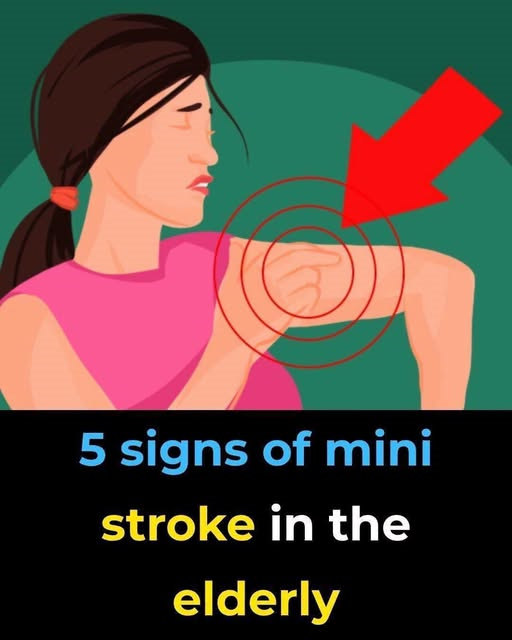
The image above shows an elderly woman experiencing discomfort in her arm, with a red arrow pointing to the affected area. The accompanying text highlights a critical health concern: “5 signs of mini stroke in the elderly.”
A mini stroke, medically known as a Transient Ischemic Attack (TIA), is a temporary disruption of blood flow to the brain. While the symptoms are often brief and may resolve on their own, a TIA is a serious warning sign that a full stroke may occur in the future. Recognizing the signs is essential for seeking timely medical care.
What Is a Mini Stroke?
A TIA occurs when a blood clot or other debris temporarily blocks blood flow to part of the brain. Unlike a full stroke, the blockage is brief, and symptoms typically resolve within minutes to hours. However, the underlying risk factors remain, and up to one in three people who experience a TIA will eventually have a full stroke.
5 Signs of Mini Stroke in the Elderly
1. Sudden Weakness or Numbness
One of the most common signs is sudden weakness or numbness in the face, arm, or leg, especially on one side of the body. The image depicts a woman touching her arm, which may indicate this symptom.
2. Trouble Speaking or Understanding
Slurred speech, difficulty finding words, or trouble understanding what others are saying can occur during a TIA. This may be brief but should not be ignored.
3. Vision Problems
Sudden blurred vision, double vision, or loss of vision in one or both eyes can be a sign of a TIA. This may affect only one eye or part of the visual field.
4. Dizziness or Loss of Balance
Feeling dizzy, unsteady, or having trouble walking can indicate a TIA affecting the brain’s balance centers. This is particularly concerning in the elderly, who are already at higher risk of falls.
5. Confusion or Difficulty Understanding
Sudden confusion, disorientation, or difficulty following conversations can occur during a TIA. This may be mistaken for normal aging, but it is a symptom that warrants attention.
The Importance of Acting FAST
The acronym FAST is a simple way to remember the most common signs of stroke and TIA:
- Face drooping
- Arm weakness
- Speech difficulty
- Time to call emergency services
Even if symptoms resolve quickly, it is essential to seek medical attention immediately. A TIA is a medical emergency that requires evaluation to prevent a future stroke.
Risk Factors for Mini Stroke
Several factors increase the risk of TIA and stroke, including:
- High blood pressure
- Diabetes
- High cholesterol
- Smoking
- Heart disease
- Age over 55
- Family history of stroke
When to See a Doctor
If you or an elderly loved one experiences any of these symptoms, even briefly, call for emergency medical help. Do not wait to see if the symptoms go away on their own. A doctor can perform tests to determine the cause and recommend treatment to reduce the risk of a future stroke.
Conclusion
Mini strokes are serious warning signs that should never be ignored. Recognizing the symptoms and seeking immediate medical care can help prevent a more severe stroke and protect long-term health.