
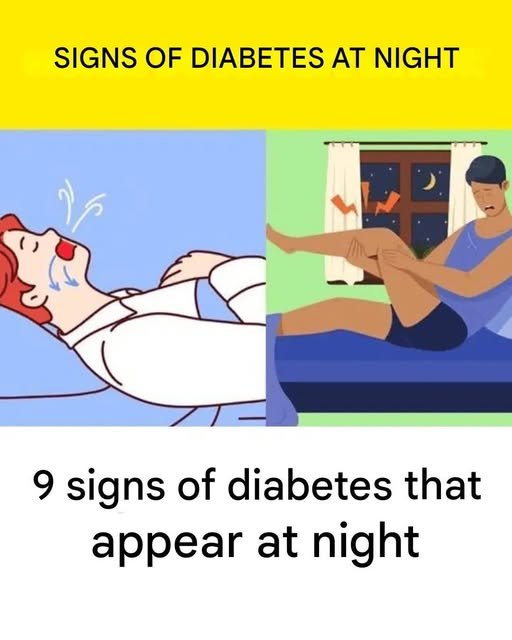
The image above highlights a topic that many people may overlook: the symptoms of diabetes that can appear during the night. The graphic shows two common nighttime experiences—excessive sweating and leg cramps—and asks readers to consider whether these might be signs of something more serious.
Diabetes is a chronic condition characterized by high blood sugar levels. While symptoms can occur at any time of day, some are particularly noticeable at night when the body is at rest and distractions are minimal. Recognizing these nighttime signs can lead to earlier diagnosis and better management.
9 Nighttime Signs of Diabetes
1. Excessive Sweating
Waking up drenched in sweat, even when the room is cool, can be a sign of low blood sugar (hypoglycemia) during the night. This is especially common in people who take insulin or certain diabetes medications.
2. Frequent Urination
High blood sugar causes the kidneys to work harder to filter and absorb excess glucose. The result is more frequent urination, including during the night (nocturia). This can disrupt sleep and lead to fatigue during the day.
3. Excessive Thirst
Frequent urination leads to fluid loss, which can cause excessive thirst. You may wake up feeling very thirsty or need to drink water during the night.
4. Leg Cramps
Muscle cramps, particularly in the legs and feet, are a common complaint among people with diabetes. They can be caused by electrolyte imbalances, nerve damage, or poor circulation.
5. Numbness or Tingling in the Feet
Diabetic neuropathy, or nerve damage, often affects the feet and legs. This can cause a tingling, burning, or numb sensation that may be more noticeable at night.
6. Restless Legs
Some people with diabetes experience an uncontrollable urge to move their legs, especially when lying down. This can interfere with falling asleep and staying asleep.
7. Blurred Vision
High blood sugar can cause the lens of the eye to swell, leading to blurred vision. This may be more noticeable at night or upon waking.
8. Headaches
Fluctuations in blood sugar can trigger headaches, including in the early morning hours. These may be a sign of overnight blood sugar swings.
9. Difficulty Sleeping
All of the above symptoms can contribute to poor sleep quality. Additionally, high blood sugar can cause fatigue and make it difficult to fall or stay asleep.
When to See a Doctor
If you are experiencing one or more of these symptoms regularly, it is important to consult a healthcare professional. They can perform blood tests to check your blood sugar levels and determine whether diabetes or another condition is the cause.
Early diagnosis and management of diabetes are crucial for preventing complications, including nerve damage, kidney disease, and cardiovascular problems.
Conclusion
The signs of diabetes can be subtle, especially at night. Paying attention to changes in your body and seeking medical advice when needed is the best way to protect your health.