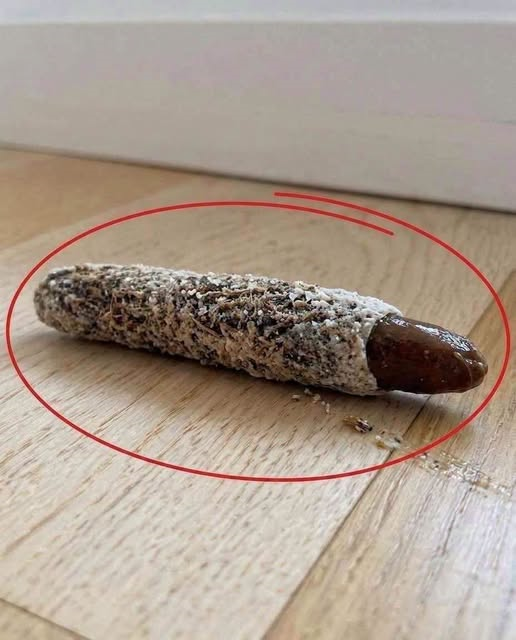
At first, it looked like a tiny piece of dust rolled into a rough tube. Lying near the wall, the strange object caught my attention because one end appeared open, with something brown peeking out. I almost mistook it for ordinary debris, but its unusual shape made me look closer.
The object may have been a case built by a case-bearing moth larva, sometimes called a household casebearer. These tiny insects create portable shelters using silk mixed with dust, hair, lint, and other particles collected from their surroundings.
A Portable Home Built from Debris
What makes this discovery fascinating is that the larva carries its shelter wherever it goes. Its small body can extend through an opening to move and feed, then retreat inside when disturbed. The rough covering helps camouflage the creature against floors, walls, and other surfaces.
The case itself is a remarkable piece of natural engineering. The larva spins silk to hold together whatever materials it finds nearby—dust, lint, pet hair, and tiny fibers. The result is a textured, tube-like structure that blends into its environment. To the untrained eye, it looks like a stray clump of dirt or debris, which is exactly the point.
Does Finding One Mean You Have an Infestation?
Although the case may look alarming, finding one does not automatically mean your home is infested. These insects can appear in quiet corners, closets, beneath furniture, and along baseboards, where dust and fibers accumulate. A single case is often just a sign that a moth larva has found a quiet spot to develop.
However, some related moth larvae can damage natural materials such as wool, silk, fur, and feathers. If you discover several cases near clothing or carpets, inspect those items for small holes, shed skins, or other signs of insect activity. These clues can help you determine whether the issue is isolated or part of a larger problem.
Simple Steps to Address the Issue
Fortunately, the first steps are simple. Remove the object with a tissue or vacuum cleaner, then clean nearby corners, baseboards, and spaces beneath furniture. Reducing dust and lint in these areas removes the materials the larvae use to build their cases, making it harder for them to thrive.
If you repeatedly discover similar cases, inspect stored fabrics and consider contacting a pest-control professional. They can help identify the species and recommend a targeted treatment plan if needed.
The Importance of Accurate Identification
It is important to remember that appearance alone cannot confirm the exact species. Several insects produce similar protective coverings, so a clear photograph or professional identification may be necessary if the problem continues.
A Reminder of Nature’s Ingenuity
Sometimes, what looks like an ordinary speck of dirt turns out to be a remarkable example of nature’s ingenuity. A tiny mystery on your floor can reveal an entire hidden world of insect behavior—one that is easy to overlook but fascinating to understand.