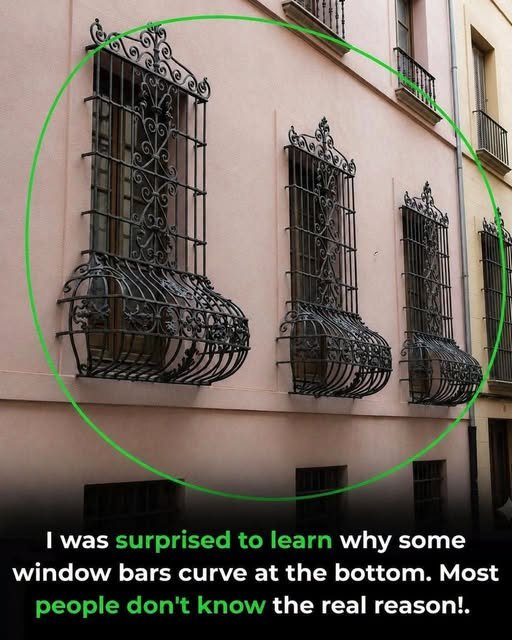
The image above highlights a common architectural feature found on buildings in many European cities—window bars that curve outward at the bottom, forming a small, rounded cage. While most people assume this is purely decorative, there is a practical reason behind the design.
A Dual Purpose: Security and Ventilation
The curved section at the bottom of the window grille serves two main functions. First, it provides security by preventing intruders from entering through the window. The outward curve makes it difficult to reach through the bars or use tools to manipulate the window lock.
Second, and more importantly, the curved shape allows for ventilation while maintaining safety. When the window is open, the curved section creates a small space that allows air to circulate into the room without creating a large enough opening for someone to climb through. This is particularly useful in warm climates where residents want to keep windows open at night for airflow but still need protection.
Historical Context
These types of window grilles, often made of wrought iron, became popular in Mediterranean and Latin American architecture. The curved design is sometimes referred to as a “belly” or “basket” and was a common feature in colonial-era buildings. The design allowed residents to open their windows for fresh air while maintaining a barrier against intruders, animals, or debris.
Common Myths
There are several misconceptions about the purpose of these curved bars. Some people believe they are purely for decoration, while others have suggested more fanciful explanations—such as preventing zombies or vampires from entering, or serving as a place to hang flower pots. While these ideas are entertaining, the primary purpose remains practical: security and ventilation.
Why It Matters
Understanding the function of architectural features like this can help us appreciate the ingenuity of past builders. They solved a real problem—how to keep a home safe while allowing fresh air to flow—with a simple, elegant design.