
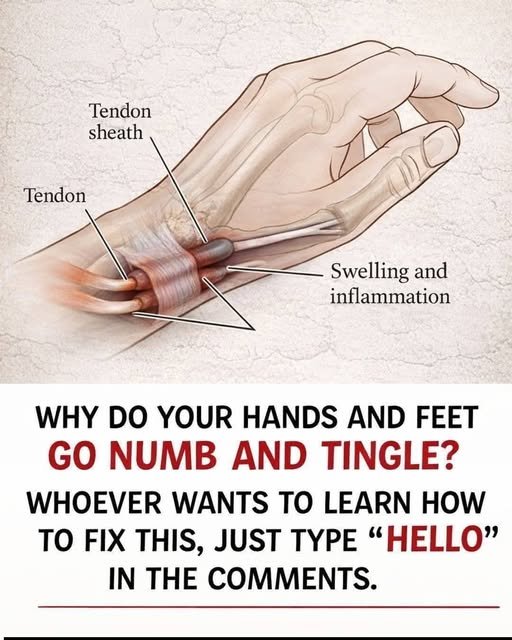
The image above shows an anatomical illustration of a hand with tendons and tendon sheaths, highlighting an area of swelling and inflammation. The accompanying text asks, “Why do your hands and feet go numb and tingle?” and invites readers to type “HELLO” in the comments to learn how to fix it.
Numbness and tingling in the hands and feet are among the most common complaints doctors hear. These sensations, medically known as paresthesia, can have a wide range of causes—from temporary pressure on a nerve to more serious underlying conditions. Understanding the potential reasons is the first step toward finding relief.
Common Causes of Numbness and Tingling
1. Nerve Compression or Entrapment
This is one of the most frequent causes. When a nerve is compressed or squeezed, it can cause tingling and numbness in the area it supplies. Common examples include:
- Carpal Tunnel Syndrome: Compression of the median nerve in the wrist, causing numbness in the thumb, index, and middle fingers.
- Cubital Tunnel Syndrome: Compression of the ulnar nerve at the elbow, causing numbness in the ring and pinky fingers.
- Sciatica: Compression of the sciatic nerve in the lower back, causing numbness and tingling that radiates down the leg.
- Tarsal Tunnel Syndrome: Compression of the tibial nerve in the ankle, causing numbness in the foot.
The image specifically illustrates tendon sheaths and swelling, which is often associated with conditions like tenosynovitis—inflammation of the fluid-filled sheath that surrounds a tendon. This inflammation can put pressure on nearby nerves, leading to numbness and tingling.
2. Poor Circulation
Reduced blood flow to the extremities can cause numbness and tingling. This can be due to:
- Peripheral Artery Disease (PAD): Narrowing of the arteries that supply blood to the legs and feet.
- Raynaud’s Phenomenon: A condition where blood vessels in the fingers and toes spasm in response to cold or stress.
- Blood Clots: A clot can block blood flow and cause sudden numbness.
3. Diabetes and Peripheral Neuropathy
High blood sugar levels over time can damage nerves, a condition called diabetic neuropathy. This often starts with tingling and numbness in the feet and hands.
4. Vitamin Deficiencies
Low levels of vitamin B12, vitamin B6, vitamin E, or copper can affect nerve health and lead to numbness and tingling.
5. Medications
Some medications, including certain chemotherapy drugs, antibiotics, and anticonvulsants, can cause nerve damage and paresthesia as a side effect.
6. Other Medical Conditions
- Multiple Sclerosis (MS): A disease that affects the central nervous system and can cause numbness and tingling.
- Hypothyroidism: An underactive thyroid can lead to nerve damage.
- Autoimmune Diseases: Conditions like lupus and rheumatoid arthritis can cause nerve inflammation.
When to Seek Medical Help
While occasional numbness and tingling are usually harmless and resolve on their own, you should consult a healthcare professional if:
- The sensations are persistent or worsening.
- They interfere with your daily activities or sleep.
- You experience weakness in your hands, feet, or limbs.
- You have difficulty walking or balancing.
- The numbness is accompanied by pain, swelling, or discoloration.
- You have an underlying condition like diabetes or a history of stroke.
How to Address Numbness and Tingling
The treatment for numbness and tingling depends on the underlying cause. Some general strategies that may help include:
- Stretching and Exercise: Gentle stretching and regular movement can help relieve nerve compression.
- Ergonomic Adjustments: Improving your posture and workstation setup can reduce pressure on nerves.
- Warm Compresses: Applying warmth can improve circulation.
- Vitamin Supplementation: If a deficiency is identified, your doctor may recommend supplements.
- Physical Therapy: A therapist can teach you exercises to relieve nerve compression.
- Medical Treatment: In some cases, medication, injections, or surgery may be necessary.
Conclusion
Numbness and tingling in the hands and feet are common symptoms with many possible causes. While they are often temporary and harmless, persistent or worsening sensations should be evaluated by a healthcare professional. Identifying the underlying cause is the key to finding the right treatment and preventing further complications.