
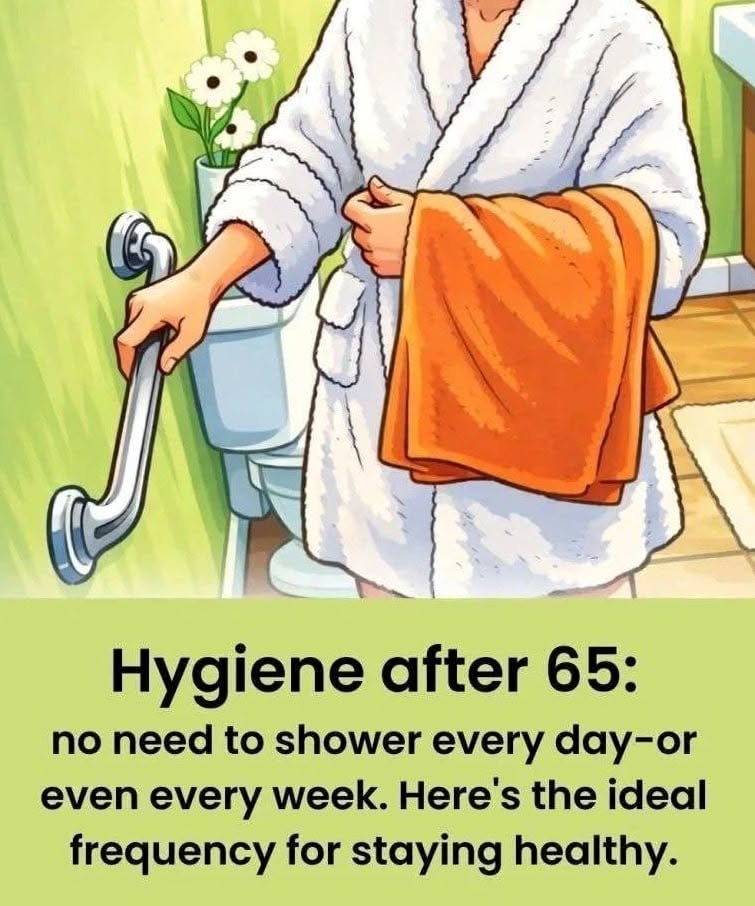
The image above raises an important question that many older adults and their caregivers have: after age 65, how often should you actually shower? The claim that you don’t need to shower every day—or even every week—might sound surprising, but it is supported by dermatologists and geriatric specialists who understand how aging skin changes.
Why Aging Skin Needs a Gentler Approach
As we age, our skin undergoes significant changes. It produces less sebum (natural oil), becomes thinner, and loses elasticity . This makes the skin more fragile and prone to dryness, irritation, and itching. The skin’s natural protective barrier—the hydrolipidic film—also weakens with age, meaning it regenerates more slowly and is less able to defend against external irritants .
Frequent showering with hot water and harsh soaps can strip away these protective oils, leading to a condition called xerosis, or extremely dry skin. According to dermatologist Dr. Sylvie Meaume, older adults tend to have “thinner, drier skin that feels tight and itches more than younger skin” . Overwashing can worsen these problems and potentially lead to skin infections.
The Recommended Shower Frequency
So, what is the ideal frequency? Most experts converge on a clear recommendation: 2 to 3 full showers per week is sufficient for most healthy adults over 65 . Some dermatologists suggest that after age 70, two showers per week may be plenty .
Dr. Sylvie Meaume recommends rinsing the body daily if desired, but using soap only every third day and avoiding vigorous scrubbing . This approach maintains cleanliness while protecting the skin’s natural barrier.
The Importance of Daily Targeted Washing
Reducing full showers does not mean neglecting hygiene. On days without a full shower, experts recommend a daily targeted wash of key areas :
- Face, neck, and hands
- Underarms and skin folds (under breasts, belly folds, groin)
- Genital and anal area
- Feet, especially between the toes
- Teeth and mouth
This routine keeps you fresh and comfortable while preserving your skin’s health.
Practical Tips for Healthier Showering
When you do take a full shower, a few adjustments can make a big difference :
- Water temperature: Use lukewarm water, not hot. Hot water strips away natural oils.
- Duration: Keep showers short—3 to 4 minutes is sufficient according to Harvard researchers .
- Products: Choose gentle, moisturizing cleansers such as shower oils or syndet bars. Avoid harsh soaps and antibacterial products.
- Drying: Pat your skin dry with a soft towel instead of rubbing.
- Moisturize: Apply a moisturizer or emollient immediately after showering, while the skin is still slightly damp, to lock in hydration .
Safety Considerations
For seniors with limited mobility, showering can pose a fall risk. Simple modifications can improve safety :
- Install grab bars and use a non-slip mat
- Consider a shower chair or handheld showerhead
- Keep soap and towels within easy reach
- Ensure good lighting in the bathroom
When to Adjust Your Routine
The ideal frequency can vary based on individual factors :
- More frequent showers: During hot weather, after intense physical activity, or if you experience excessive sweating or incontinence
- Less frequent showers: During cold, dry weather or if you have very dry or sensitive skin
- Consult a doctor: If you have skin conditions like eczema, psoriasis, or diabetes, or if you notice persistent skin irritation
Conclusion
After 65, the goal is not simply to shower less, but to shower smarter. By reducing full showers to 2-3 times per week, practicing daily targeted hygiene, and using gentle products, you can maintain cleanliness while protecting your skin’s health and comfort.