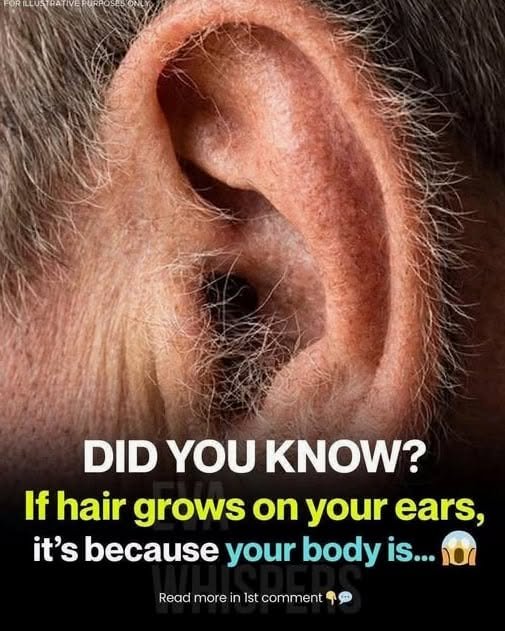
The image above features a close-up of an ear with visible hair growth, accompanied by the text: “DID YOU KNOW? If hair grows on your ears, it’s because your body is…”
It is a question that sparks curiosity and, sometimes, concern. Many people wonder if finding hair on their ears is a sign of a serious health issue or simply a natural part of getting older. The answer is a mix of biology, genetics, and hormones.
The Most Common Reason: Aging and Hormones
For most people, visible ear hair is a completely normal and harmless part of the aging process. As men get older, it is common to develop thicker, coarser hair on the ears and nose . This change is largely driven by hormones, specifically androgens like testosterone.
However, the relationship is not as simple as “more testosterone equals more ear hair.” In fact, testosterone levels generally decline with age . The more likely explanation is that the hair follicles in the ears become more sensitive to testosterone over time . This means that even with lower hormone levels, the follicles respond more strongly, leading to thicker and more noticeable hair growth.
This also explains a common paradox many men experience: hair on the scalp may become thinner, while hair on the ears, eyebrows, and nose becomes more prominent. Different hair follicles respond differently to hormonal signals .
The Role of Genetics
Your genes also play a significant role in determining how much ear hair you develop. If your father or grandfather had noticeable ear hair, you may be more likely to experience the same pattern . Family resemblance is a strong indicator of how your hair follicles will behave as you age.
A Potential Link to Heart Health
While ear hair is primarily a cosmetic and age-related change, some research has explored a possible connection between ear hair and cardiovascular health. Studies have investigated whether there is an association between ear hair and heart disease, but the findings need careful interpretation .
It is important to understand that ear hair itself does not diagnose heart disease. The presence of ear hair is not a reason to panic, but it can be a reminder to pay attention to your overall cardiovascular health, especially if you have other risk factors.
Does Ear Hair Serve a Purpose?
Yes, ear hair is not entirely without function. Along with earwax, the small hairs inside and around your ears help prevent dust and debris from traveling deeper into the ear canal . They act as a natural filter, protecting the sensitive structures inside the ear.
However, unusually dense hair can occasionally contribute to problems. For example, having substantial ear hair may increase the risk of otitis externa, commonly known as swimmer’s ear . This is because the hair can trap moisture and create an environment where bacteria can grow.
What to Do About It
If you are bothered by ear hair, there are several safe ways to manage it:
- Trimming: Use small, rounded scissors or an electric trimmer designed for ears and nose.
- Waxing or Threading: Some people choose professional waxing or threading for longer-lasting results.
- Laser Hair Removal: For a more permanent solution, laser treatments can reduce hair growth.
It is important to avoid plucking ear hair, as this can introduce bacteria and lead to infection.
Conclusion
Ear hair is a natural part of aging for many people, driven by a combination of genetics and changing hormone sensitivity. While it is not usually a sign of a serious health problem, it is always a good idea to pay attention to your overall health and consult a doctor if you have concerns.