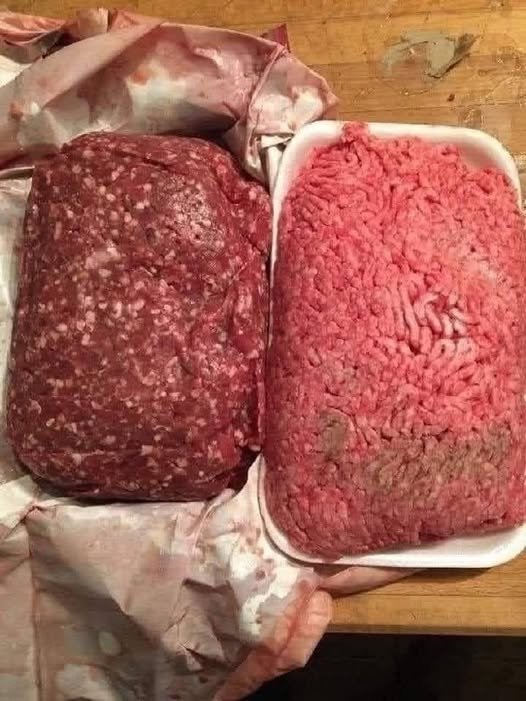
The image above shows two packages of ground beef side by side. The one on the left is a deep, dark red, while the one on the right is a bright, almost pinkish red. A social media post suggests that supermarkets are “fooling” shoppers with the brighter meat, implying it is inferior or filled with additives.
While the color difference is real, the explanation is more nuanced than the post suggests. Understanding the science behind meat color can help you make informed choices at the grocery store.
Why the Color Difference Exists
The color of ground beef is largely determined by a protein called myoglobin. Myoglobin reacts with oxygen to change color. When it is exposed to oxygen, it forms oxymyoglobin, which gives meat its bright cherry-red appearance. When oxygen is not present, it converts to metmyoglobin, which has a brown or purplish color .
This means that the bright red color on the surface of ground meat is a result of oxygen exposure, while the darker color in the center or in vacuum-sealed packages occurs because oxygen has not reached the meat .
The Role of Packaging
The packaging method plays a significant role in the color you see. Ground beef in traditional Styrofoam trays wrapped in plastic allows oxygen to pass through, keeping the surface of the meat bright red . In contrast, vacuum-sealed packages remove oxygen, which is why the meat appears darker and more purplish .
Neither color indicates spoilage on its own. In fact, the darker color in vacuum-sealed packages is often a sign that the meat has been protected from oxygen and is still fresh.
Addressing the “Fooling” Claims
The social media post suggests that supermarkets use additives to make meat look brighter. While it is true that some packaging systems use small amounts of carbon monoxide to maintain color, this practice is regulated and does not allow for the sale of spoiled meat . The color difference is primarily a natural chemical reaction, not a sign of deception .
The post also claims that store-bought ground beef is “from scraps from multiple cows” and lacks a guarantee of origin. While it is true that ground beef can be a blend of meat from different sources, this is a standard industry practice that is regulated for safety . The USDA requires that ground beef be labeled with its country of origin if it is imported .
How to Tell If Meat Is Safe
Color alone is not a reliable indicator of freshness. The most reliable signs of spoilage are:
- Off smell: A sour or unpleasant odor.
- Tacky texture: The meat feels slimy or sticky.
- Surface discoloration: If the meat is brown or grey all the way through, it may be past its prime .
If the meat has been properly refrigerated and is within its use-by date, the color variation is a normal occurrence and the meat should be safe to eat.
Conclusion
The color difference in ground beef is a natural reaction to oxygen, not a sign of spoilage or deception by supermarkets. Understanding this process can help you make more informed decisions when shopping and preparing food.